For European property investors entering Southeast Asia, one word often raises an immediate question: leasehold.
Why would an investor pay for a property without owning the land forever?
The answer is more interesting than it first appears.
Across Southeast Asia, leasehold is not simply a restriction. In many markets, it is the legal bridge that allows international investors to access some of the region’s most attractive property markets.
Why does leasehold exist?
Countries such as Thailand, Indonesia and the Philippines place restrictions on foreign ownership of land. These rules are designed to protect domestic control of land while still allowing international capital to participate in the property market.
Leasehold provides the solution.
Instead of transferring the land permanently, the owner grants the investor the right to use and develop the property for an agreed period, often under a long-term lease structure.
For governments, this protects land ownership.
For investors, it creates access.
And that distinction is important.
Think about the investment differently
European investors are accustomed to thinking about property as something they own indefinitely. But an investment does not necessarily need perpetual ownership to be attractive.
The real question is:
What can the asset generate during the period you control it?
If a property is located in a high-demand area, generates strong rental income and benefits from capital appreciation, the investment case can remain compelling even when the underlying land is leasehold.
A 25- or 30-year lease, for example, can represent a significant investment period, particularly for an investor focused on income generation rather than passing the property down indefinitely.
The value is in the economic rights and income potential attached to the lease, not simply in owning the land forever.
Why this matters in markets like Bali
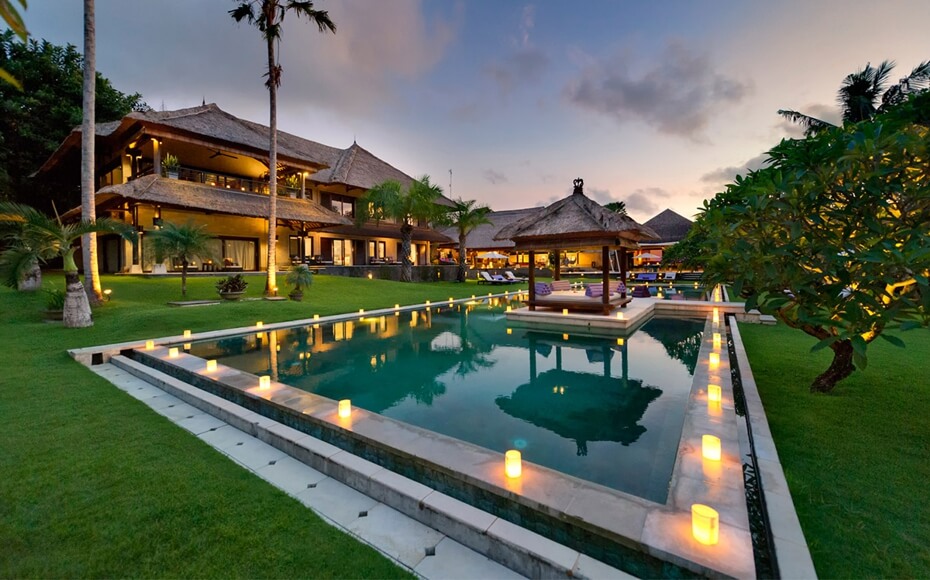
Bali is a good example of why leasehold has become an important part of the foreign investment landscape.
International investors are attracted to locations such as Canggu, Uluwatu and Sanur because of tourism, international residents and lifestyle demand. Yet foreign ownership of land is restricted.
Leasehold structures therefore enable international investors to participate in these markets without owning the underlying land outright.
This can open opportunities that would otherwise be inaccessible.
But leasehold is not automatically a good investment.
The lease is the investment
This is where sophisticated investors need to look beyond the headline price or advertised yield.
The length of the lease, renewal provisions, transfer rights, inheritance, permitted use, construction rights, rental rights and exit strategy all matter.
A beautifully designed villa with an attractive yield can still be a poor investment if the lease is badly structured. Conversely, a well-negotiated long-term lease in a prime micro-location can provide an investor with significant economic value.
The question is therefore not simply:
“Do I own the land?”
It is:
“What rights am I acquiring, for how long, and what return can those rights generate?”
A different way of investing
For European investors looking toward Southeast Asia, understanding leasehold is essential.
It represents a different approach to property ownership, but also one of the mechanisms that makes international investment possible in markets where freehold land ownership is restricted.
The smartest investors are not necessarily looking for perpetual ownership.
They are looking for strong locations, secure structures, sustainable demand and attractive returns over their investment horizon.
And in Southeast Asia, leasehold can be the mechanism that brings all four together.